
Map of Los Angeles Preferential Parking Districts
Posting this so I have an easy place to find it. LADOT provides their own map but it’s ugly and hard to use.

Posting this so I have an easy place to find it. LADOT provides their own map but it’s ugly and hard to use.
A friend of mine recently got his first job as a staff writer on a TV show, and he asked if I had any advice.
Though I don’t claim to be an expert on this stuff, I did a quick poll of the writers on Santa Clarita Diet and asked what they would tell a new writer joining a TV staff for the first time…
Never forget that your job is to make the showrunner’s life easier and not harder. Your job is to help them make the show they want to make and not the show you want to make.
Try to always pitch solutions, not problems. At the staff writer level (and even above), you don’t want to be in the role of nag or complainer. That doesn’t mean you can’t criticize anything, but you should be constructive.
So instead of saying, “this story isn’t working because the beginning is boring,” you would think of a potential fix before speaking. You might say something like: “I feel like the story is taking a long time to get started. What if we combined these two early scenes into one so that the story gets moving faster?”
It doesn’t have to be the perfect fix, but you should be presenting more than just a complaint.
This is always tricky. It’s okay as the staff writer to hang back and listen, especially the first few weeks. In general you always want to be listening. At the same time, you don’t want to take that advice too far. It is your job to contribute, so you want to pick your spots.
In picking your spots, you might find a situation where you have some personal life experience that relates to the scene or character being discussed. Something that only you can contribute. But obviously no need to force that kind of connection if it’s not there.
When you do pitch, try to pitch clearly. Not just the ideas you’re pitching, but literally the voice you use. Don’t mumble or hide.
There may be older writers on a staff who openly complain or whine about some element of the show or something else, and it will be tempting to join in with them. But as a staff writer you haven’t earned the right to complain.
In general, only pitch an idea once. If it’s explicitly rejected, let it be rejected and move on. The showrunner’s decision may seem wrong to you. You may think to yourself, “if only these dummies would listen to my great idea, this problem would be solved!”
Here’s one way I think about it. Imagine the writers room like an old-fashioned galley ship with hundreds of oarsmen all rowing in unison. As a staff writer, you’re oarsman #137 and you’re all the way in the back of the ship. Now you may or may not have a better idea of where to steer the ship than the captain up front, but if you try to steer the ship yourself, all you’re going to do is screw up everyone else’s rhythm. At the end of the day, you can’t steer the ship from the back.
The showrunner has different concerns than you do, some that you may not even be aware of. Again, it’s your job to help him or her make the show they want to make, not the show you want to make. So if your idea is rejected, it’s your job to do everything possible to execute the idea the showrunner has settled on as well as possible.
If you make a pitch and it’s greeted with silence, that’s also a polite way of saying no.
As you get more comfortable in the room, you might find a situation where you can re-pitch a modified version of an idea that was already rejected, but just make sure you’re not beating a dead horse.
If you have a pitch that goes over well, don’t brag about it or think you’re somehow superior to someone else whose pitch didn’t land today. Yes, you want the showrunner and other writers to know that you’re doing a good job, but the way you do that is by consistently doing a good job, not by pointing it out to them.
Likewise, you may pitch a solution, and it may be rejected. Then, months later during a rewrite, or sometimes minutes later during the same session, you may hear someone else, even the showrunner, pitch virtually the same idea and it’s suddenly accepted. In these moments you nod and support the good idea; you don’t grouse and try to claim credit. No one will be impressed by you pointing it out.
Sometimes the room isn’t ready for an idea, and part of pitching is knowing when and where to pitch something.
This isn’t universal, but if you befriend some of the more experienced writers on the staff, you may be able to politely ask one to offer feedback on your first story area before you turn it into the showrunner.
This is most useful if it’s someone who has worked with the showrunner before and knows what they like and don’t like.
I struggle to work in silence. My mind gets crowded with ideas. But I also struggle to work with music. My mind begins to follow the lyrics.
Ambient noise is a way to drown out your thoughts without distracting your focus. Here are three tools I recommend:
SimplyNoise is a site that plays white, pink, and brown noise. There are many sites and many apps that do this, but in my opinion, SimplyNoise has the “cleanest” noise. I find other digital noise generators to be harsh or grating. Other generators also tend to loop in distracting ways.
If you don’t like using an iPhone app or a web browser to play the noise, you can pay a dollar to download a 60-minute MP3.
Pros:
Cons:
Get Work Done Music streams fast-paced music from SoundCloud. The songs tend to be electronica/trance music, usually with pulsing rhythms.
Pros:
Cons:
Coffitivity is a site that plays coffee shop noises on a loop. This feels like a dumb idea. But when combined with music, it provides a pleasing mix of noise that is just enough to balance out your music’s lyrics while still drowning out stray thoughts.
If you don’t like using a web browser to play sound, you can just download the MP3.
Pros:
Cons:
None: This is what I use most of the time.

I did not like Man of Steel. If you want to know why, I recommend two posts about the film:
But I do want to touch on one idea that I haven’t seen explored much in reviews of the film.
A common defense of Man of Steel is that it has “good action.” The movie has huge special effects sequences, featuring superpowered fist fights, flying dragon-butterfly monsters, laser eye-battles, etc… In short, superhero battles on a level never before attempted.
And all of that action is boring.
Man of Steel lacks original or inventive ideas for its superhero fight scenes. Characters line up and punch and hit each other through building after building. “Pow! Superman crashes into a bank vault!” “Blammo! Zod plows through a gas station!” The spectacle entertains for about fifteen minutes, but the movie never finds a second gear. Superman and Zod are invulnerable. There are no consequences to each punch or each moment in any particular fight scene. Perhaps sensing this problem, the movie tries to blow up bigger and bigger buildings.
The action scenes also lack character. We rarely understand the personal stakes in each fight. Superman has an elaborate brawl with three Kryptonians that destroys his home town of Smallville and at the end… Nothing. The villains just fly away because they got tired of fighting. That’s because there is nothing at stake in the scene for them. The characters simply fight to fight.
What’s so sad about this is that fun goofy action shouldn’t require you to turn your brain off or ignore the story. Just look at the batpod sequence in The Dark Knight:
The Dark Knight batpod sequence is much, much smaller than even the opening action scenes in Man of Steel, but it feels grounded and visceral. Harvey Dent, a character we’ve spent significant time with, is in mortal peril after bravely standing up to the Joker by claiming that he is Batman. If the Joker kills Harvey, the city will be thrown into further panic and chaos. Also in the audience’s mind: Harvey and Batman are competing for the same woman, Rachel, so Batman saving Harvey will have significant personal consequences.
But forget all that character shit. Isn’t this sequence fucking fun!? Batman reveals his batmobile can turn into a crazy sideways motorcycle, races across Gotham, drives through a mall, plays chicken with a semi-truck, swoops under the truck, flips the truck AT-AT style, then drives up a wall to turn around? HOLY SHIT THAT WAS COOL.
I defy anyone to find one sequence in Man of Steel even half as unexpected and entertaining as this Dark Knight sequence.
You can read Hulk’s article using my DeHulkifier bookmarklet. ↩
Film Crit Hulk’s latest article dives into convoluted blockbusters like Star Trek Into Darkness, and he makes a particularly deep point about the difference between story and plot:
And so when we look at the stories in Abrams’ work we don’t find much in the way of story at all. We find plots. It’s all master secretive plans built on reveals upon reveals upon reveals. We watch as brilliant characters play a high-stakes game of trying to outsmart each other. We watch those plans get teased out in incomprehensible ways. We watch them unravel a story without a hint of organic discovery.
Lost fans should be shaking their heads in recognition right now.
Hulk’s post clarifies a lesson I’ve been trying to learn. Screenplay is a way to tell a story, but it is not the story itself.
Story is something underneath the screenplay. It’s what the dialogue, action, plot, and pacing of the screenplay are trying to convey.
Without a story, a screenplay is just empty mechanics. It’s hollow and unfulfilling. In short, it’s Transformers 2.
“As a culture we have moved into a realm where the consumption of news is a near-constant process. Users with smartphones and tablets are consuming news in bits and bites throughout the course of the day — replacing the old standard behaviors of news consumption over breakfast along with a leisurely read at the end of the day.”
I don’t like Google’s explanation for killing Google Reader.
Yes, Twitter and social media have changed how we consume news and internet posts. But the niche Google Reader and RSS serve is not about “leisurely” browsing of the internet over eggs and bacon.
By checking my RSS feed, I can skim and select from hundreds of stories from my favorite sites and authors in less than a minute.1
In contrast, Twitter and Facebook give me a random shotgun blast full of memes, links, and advertisements. I do not want to like or follow every public figure, author, or company that interests me and then have those people shit up my social feed. My social feed is just that, social. It shows me what other people think I should be reading, which is not always what I want to read.
I understand that RSS has always been a niche technology and that Google is probably making the right choice by focusing their efforts on more casual users. But I think Wired hits on a darker, potentially more accurate explanation for the change:
Now and Plus do one thing: They keep you in Google’s world. It’s a de-emphasis of content source. In other words, rather than reading Cat Fancy religiously, you’re reading the Animals category religiously — a category populated by the sites Google’s products think you’ll enjoy most.
I can also subscribe to small sites and webcomics without worrying that I’ll miss their rare updates in my stream. ↩
Fruit flies are tiny insects that lay their eggs on the skin of ripe or fermenting fruit. They’re harmless, but you’ll occasionally find a batch of them swirling around your kitchen.
Here’s an easy way to get rid of them:
The flies are attracted to the vinegar, but the curved glass and the dishwashing soap make it impossible for them to land on the surface, so they fall through and drown.
There are other elaborate traps you can make (and obviously you should clean your kitchen as well), but the simple trap works very well.
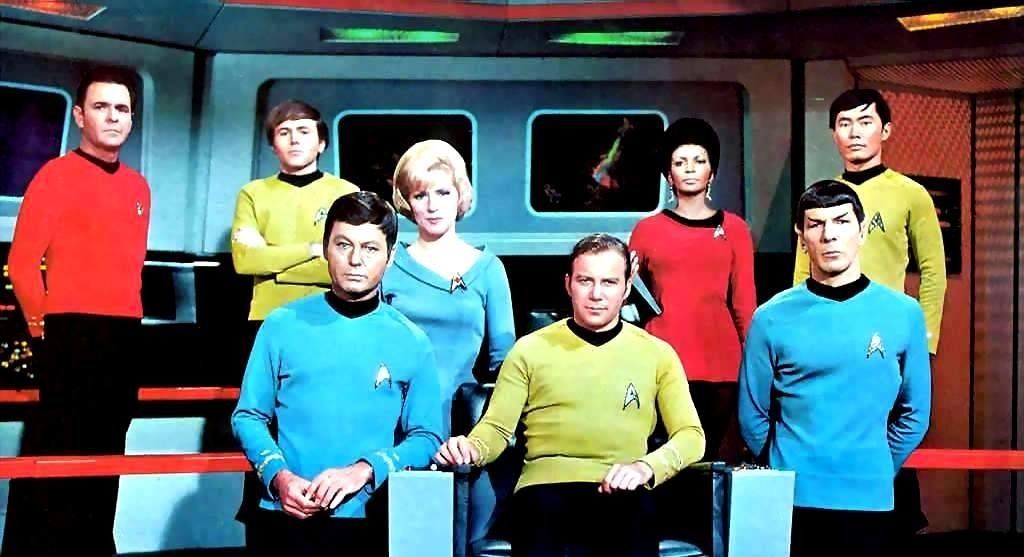
At the time, though, this was disconcertingly radical, it didn’t respect conventional norms. There was a black woman who wasn’t a cook or maid; there was a Russian (the Enemy of the current Cold War), and a Japanese (an Enemy from a previous war). Sulu and Chekov looked like the Bad Guys – but they weren’t. Spock, too, looked weird, alien, almost devilish – as though he, too, was supposed to be a Bad Guy.
From here, the author veers into goofy fanfiction, recasting and gender swapping the parts in JJ Abrams’ Star Trek in ways that would be as radical to modern audiences as the Original Series cast was to 1960s audiences. In the fantasy cast, there are no white males, and supreme effort is taken to have ethnically appropriate actors for every role (rather than fudging English for Scottish, this Asian for that Asian, etc).
The author’s approach is too nerdy even for me and gives zero deference to the financial realities of Hollywood filmmaking. But there’s an interesting point here.
Star Trek is about the future. But more specifically, Star Trek is about a radically utopian and progressive future that goes much deeper than transporters and warp drives. Recreating the relationships and stories from the original cast is fun and makes for entertaining films. But it also turns the franchise into something harmless. It makes the whole thing retro rather than radical. And something important is lost in the process.
I am not a social person and do not especially enjoy social events. For years in college, I would repeatedly say the wrong thing to people, horribly offending them with no idea how or why it had happened. My friends would then laugh and remark how I’d “done it again.”
But I have cobbled together one simple strategy that my fellow weirdos may find helpful.
Ask questions. Then ask more questions. Then keep asking questions.
“Oh, you work at X? What’s that like? Uh huh. So what companies do you represent? Oh really. What are they like? Oh really? What type of software do you use for that? How did you get that job? Oh you used to work at Y? What was that like? What’s the craziest Z you’ve seen?”
This sounds stupid. In fact, it’s basically the way computer chatbots operate.
But it is remarkably effective. And it’s not as creepy as it sounds. I’ve found that by asking many questions, I can eventually land on a topic that genuinely interests me and have a real conversation.
Here’s why it works. Everyone you meet is an expert in something. It may be something seemingly trivial, like mall security procedures1 or class action lawsuits, but no one’s made it 20+ years in life without learning a lot about something.
If you can find that hidden expertise, you’ll be amazed at the level of detail and character you can get out of someone about their job, their life, or their hobbies.
Actually I love expertise like that. I love it when someone knows everything there is to know about a topic to which I’ve applied zero thought. ↩

When I was in middle school, my brother and I used to record every episode of MST3K onto eight-hour VHS tapes. The show was on late and the jokes were fast, so we wanted to be able to watch them over and over again.
In high school, with the show cancelled, I felt certain that it was going to disappear and I’d never be able to see it again. So I started downloading the episodes from a peer-to-peer network, with a 56kbps modem, and archiving them one by one on custom-labeled CD-Rs. My goal was to have the entire show stored for posterity. By college, the CD-Rs had degraded and the whole collection was worthless. I gave up.
Now it’s 2013, and I can dial up every single episode instantly via YouTube whenever I want.
Huh. Starting to realize I wasted a lot of time.